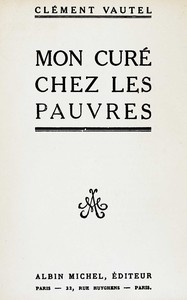
Mon curé chez les pauvres
📝 简介
"Mon curé chez les pauvres" by Clément Vautel is a novel written in the early 20th century. It offers a satirical yet affectionate portrait of Abbé Pellegrin, a plainspoken village priest and former poilu whose fierce loyalty to the poor collides with church authority, local politics, and the commerce of sacred art. When a smooth-talking “art critic” tempts him with funds for his destitute parish in exchange for a worm‑eaten crucifix, his choice ignites a public scandal that pits charity against aesthetics and power. The opening of the novel follows Abbé Pellegrin in Sableuse, where Achille de Saint‑Preux, a faux art critic, lures him with 5,000 francs “for the poor” and a flashy new statue to replace the old wooden Christ; after hesitation, the curé yields, and the man snatches the antique and flees. Exposed in the press as the Levantine dealer Zaphyri, the thief triggers uproar; the bishop sternly rebukes the curé, while the châtelains, the ambitious Cousinet couple, blame him for their own political setbacks and plot his removal. Soon, the affair becomes a cause célèbre: crowds, reporters, and dignitaries pack the courtroom as witnesses parade through and the prosecutor paints the exchange as a betrayal of national patrimony. At the start of the trial, Pellegrin refuses counsel and defends himself, insisting he chose living charity over dead “art,” railing against the fetish of objects, and claiming the poor are the Church’s first altar—his impassioned plea swelling just as the excerpt breaks off. (This is an automatically generated summary.)